
Source: Pexels.com, Duygu Kamar
Somewhere in the lives of almost every art collector who has been at this for more than a few years, there is a piece that has been quietly moved from wall to storage, from the living room to the spare bedroom, or passed off as a gift to a cousin who admired it over dinner. The acquisition was genuine at the time. The growing inability to live with it is something most collectors carry in private, rarely discussed, because the collector conversation has almost no vocabulary for this experience.
The dominant mythology of art buying runs along a single track: buy what you love, and you will never regret it. Leonard Lauder, one of the most significant collectors of the twentieth century, titled his memoir You Only Regret What You Don’t Buy. The sentiment has become an informal code among collectors. The missed acquisition is the only real wound, and the purchase is made to be the safe harbour. It is a useful corrective to the paralysis that affects many new buyers, and it is also only half the account.
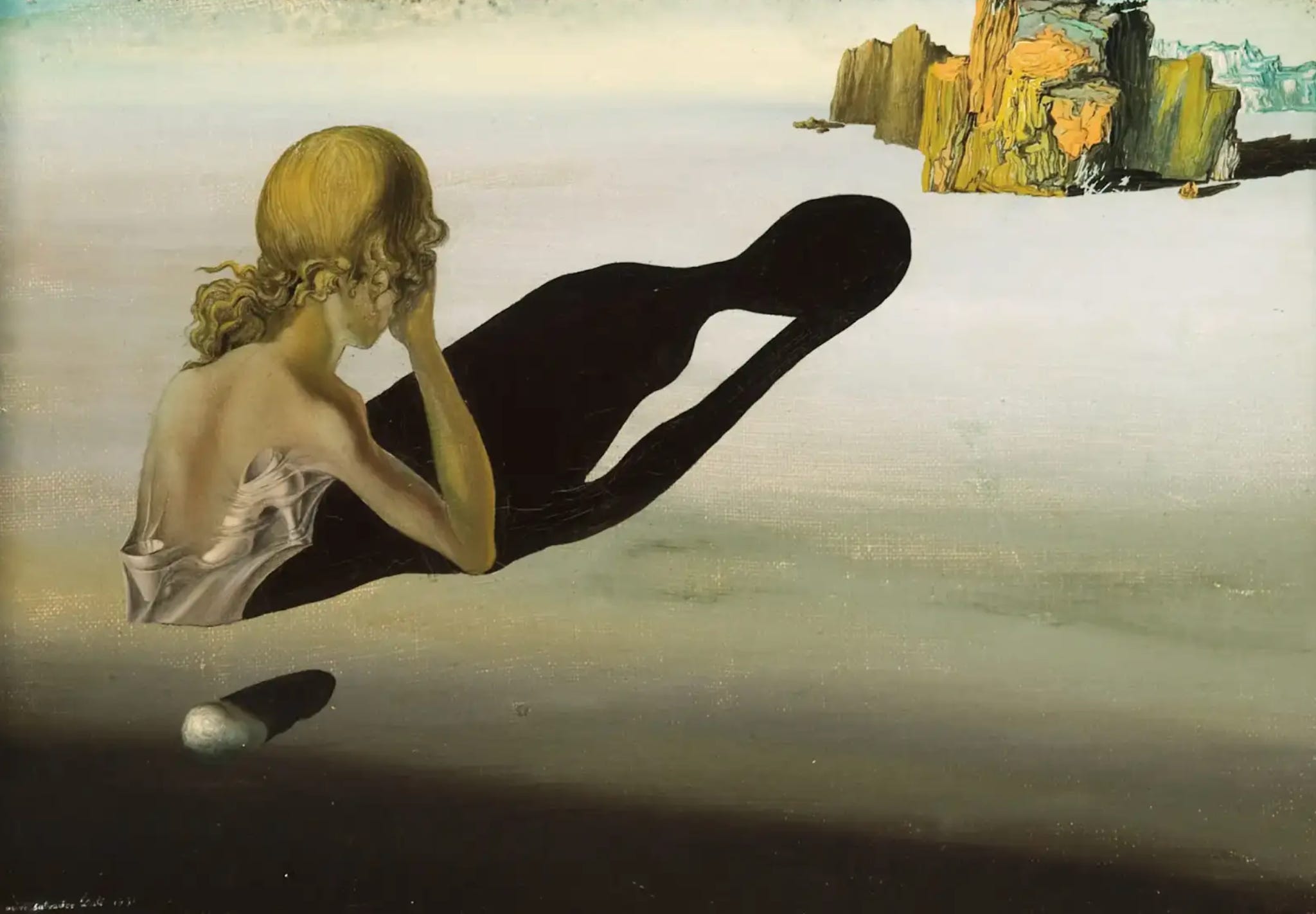
Remorse, Sphinx Embedded in the Sand (1931), Salvador Dali
Source: Catalogues.salvador-dali.org
The Different Kinds of Wrong
There are a few distinct ways a purchase can go wrong, and they are worth separating because they diagnose different things.
The most familiar is the purchase made under artificial urgency: the art fair buy, the opening-night buy, the gallery-deadline buy. Artsy has documented that timed events are among the most reliable sources of collector remorse: the compressed window creates the impression of scarcity, and the decision gets made before the work has had time to prove whether you actually want to live with it. The piece arrives, and it becomes clear that what you wanted was the experience of acquiring it rather than the work itself.
The second kind is the aspirational purchase, the work bought because it represented the collector you intended to become. This is more interesting than the first, because the aspiration was genuine. You wanted to be the person for whom this work made sense. The gap between that person and who you actually were at the moment of purchase is what the wrong purchase measures, and it will sit on the wall and mark that distance for as long as it stays there.

Regret (2020), Mariam Khachatryan.
Source: Artsper.com
The third kind tends to surface later, and is the most instructive: the piece you loved completely at the time and have simply outgrown. Perhaps you no longer resonate with what the artist stands for or the direction they’re headed towards. Research on aesthetic preferences suggests that visual taste is less stable than we assume; it shifts continuously, shaped by exposure, by emotional growth, and by the accumulation of visual experience over time. The work has not changed. You have. The purchase, made in complete good faith, now belongs to a version of yourself you no longer entirely inhabit.
What Collector Culture Doesn’t Say
The ‘buy what you love’ framework is genuinely good advice for first-time buyers navigating an intimidating, opaque market. What it suppresses is the acknowledgment that what you love is not a fixed coordinate. Your taste can be a moving target, and a collection built over years will inevitably contain pieces that reflect earlier positions you have since moved past.
Gallery and advisory culture has a structural incentive to keep the mythology intact. An art purchase regretted reflects poorly on everyone involved in the transaction, so the industry’s narrative runs toward acquisition confidence rather than honest reckoning with the complexity of collecting over time. The result is near-total silence on an experience that is, in reality, close to universal. Art Basel’s own forum on buying names the tension between buyer’s remorse and impulsive acquisition as one of the central unresolved dynamics of collecting, and then largely moves past it.
The collectors who are most instructive on this point are rarely the ones giving formal advice. They tend to surface in passing: the Swiss collector who told The Art Newspaper about his regret at not buying a Subodh Gupta when he had the chance; the patron who told Artsy she still thinks about a Henry Taylor she declined because of its size. These are the regrets that get spoken— the ones that got away. The pieces that arrived and didn’t work are much harder to find in the record.
What the Wrong Purchase Is Actually For
A piece you’ve outgrown carries its own kind of information. It marks a shift in sensibility, and that shift is worth understanding rather than filing away. The discomfort of living with work you’ve grown away from is a form of data about how your eye has moved: what you valued then, what you value now, and the specific distance between those two positions.
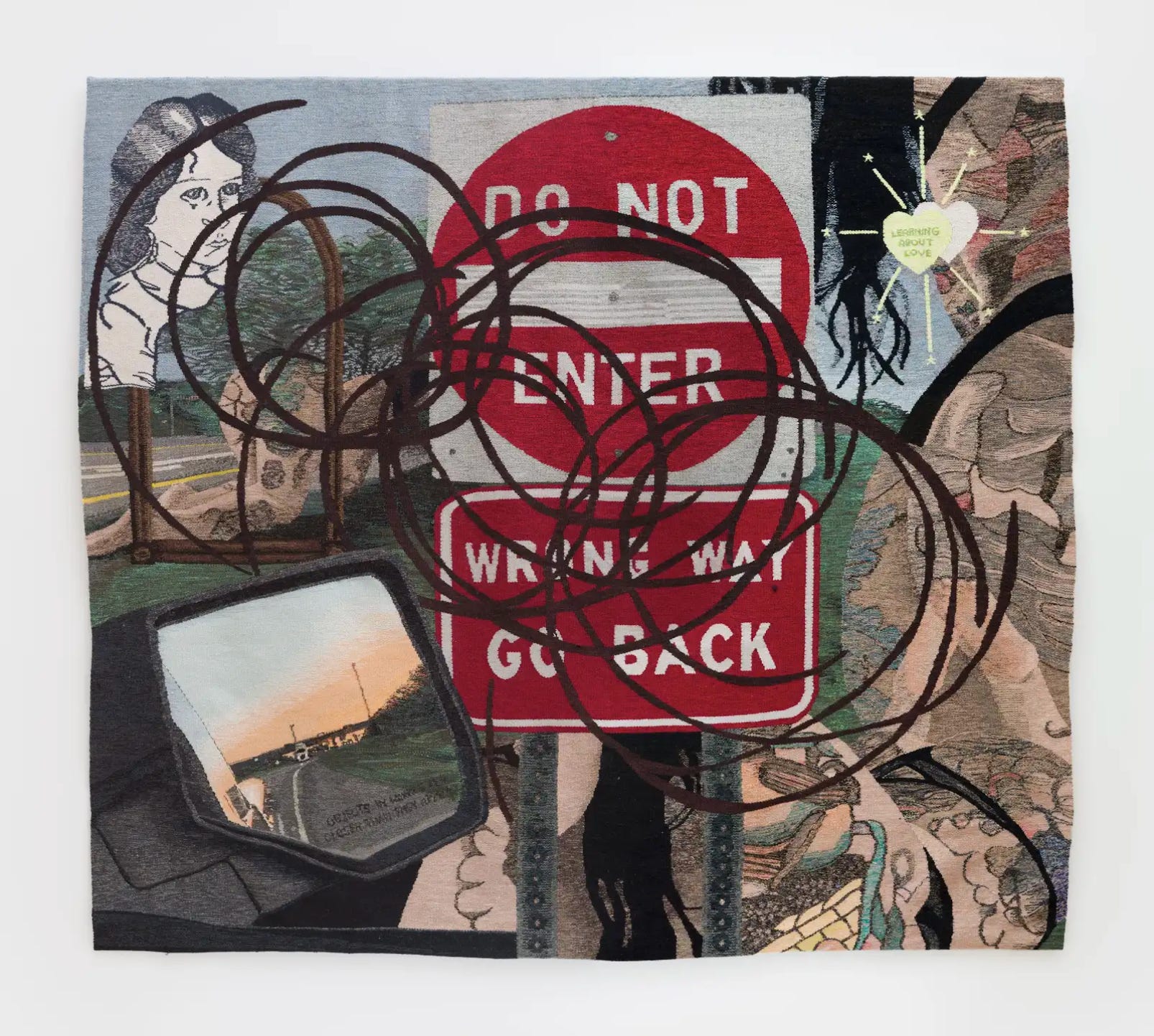
Look Back at It (2024), Erin M Riley
Source: Erinmriley.com
Collectors who have been doing this for decades often describe their early acquisitions with a mixture of affection and gentle bafflement. Those pieces served their purpose. They were the visual vocabulary exercises through which a more considered eye developed. The wrong purchase, in retrospect, usually turns out to have been exactly right for the collector who made it, even when it no longer fits the collector who exists now.
What to Do With It
Keeping a piece in storage is a reasonable choice if you are genuinely uncertain; taste can loop back, and a work that feels wrong at 34 sometimes resolves itself at 42 when the context of your life has shifted. Gifting it to someone who loves it is usually the most elegant exit: the work finds a home where it will actually be looked at, and you release it without the transactional weight of a sale.
Reselling through a gallery or secondary platform is entirely legitimate and carries no moral obligation in either direction. You bought the work, you own it, and what you do with it is yours to decide. The only choice that doesn’t serve anyone- you, the work, or the artist- is keeping it on the wall out of obligation while being unable to see it anymore.
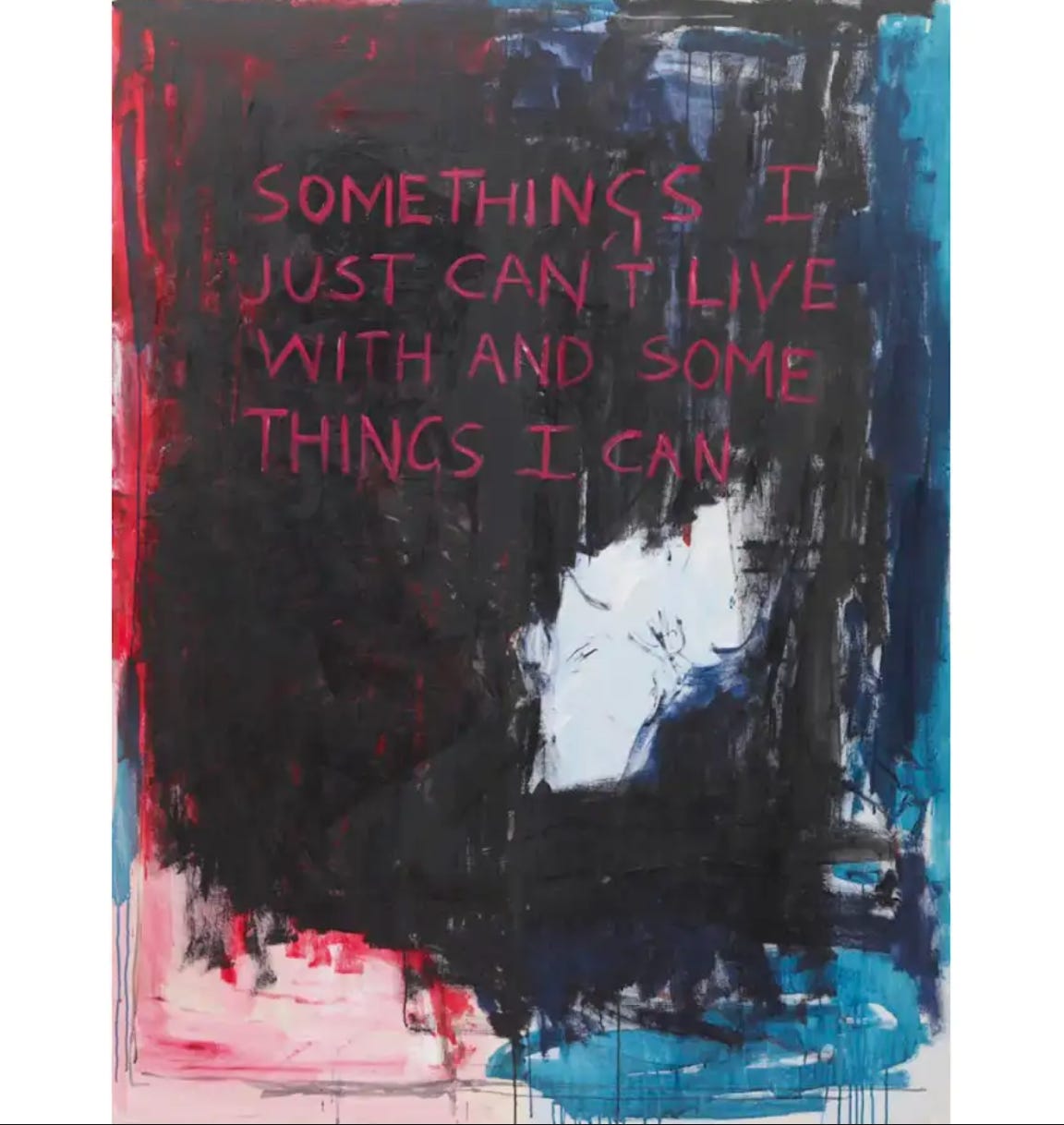
Exorcism of the Last Painting I Ever Made (1996), Tracey Emin
Source: Tracey Emin Studio
The Collection It Leaves Behind
The pieces that don’t work out have a clarifying effect on the ones that do. Most collectors who reflect honestly on the arc of their acquisition history find that the wrong purchases were as formative as the right ones (sometimes more so). Living with something that gradually stops working forces a precision about what you actually need from a piece of art: what relationship it has to sustain, what it has to hold up under repeated looking, what it asks of the room and the person in it.
Those requirements are genuinely difficult to articulate before you have experienced their absence. The first wrong purchase is, in most collecting lives, the beginning of the collection in earnest.
Sources:
Artsy: Buyer’s remorse and art fair urgency · MasonLaneArt: Art That I Regret Buying · Frontiers in Human Neuroscience: Stability of aesthetic preferences · Artsy: 6 Collectors on the one that got away · Art Basel: Balancing buyer’s remorse and intuition