‘Thangam’: Ornaments & Monuments by Mrudhubhashini
Using the beauty & allure of gold, the artist invites contemplations on the financial agency held by women

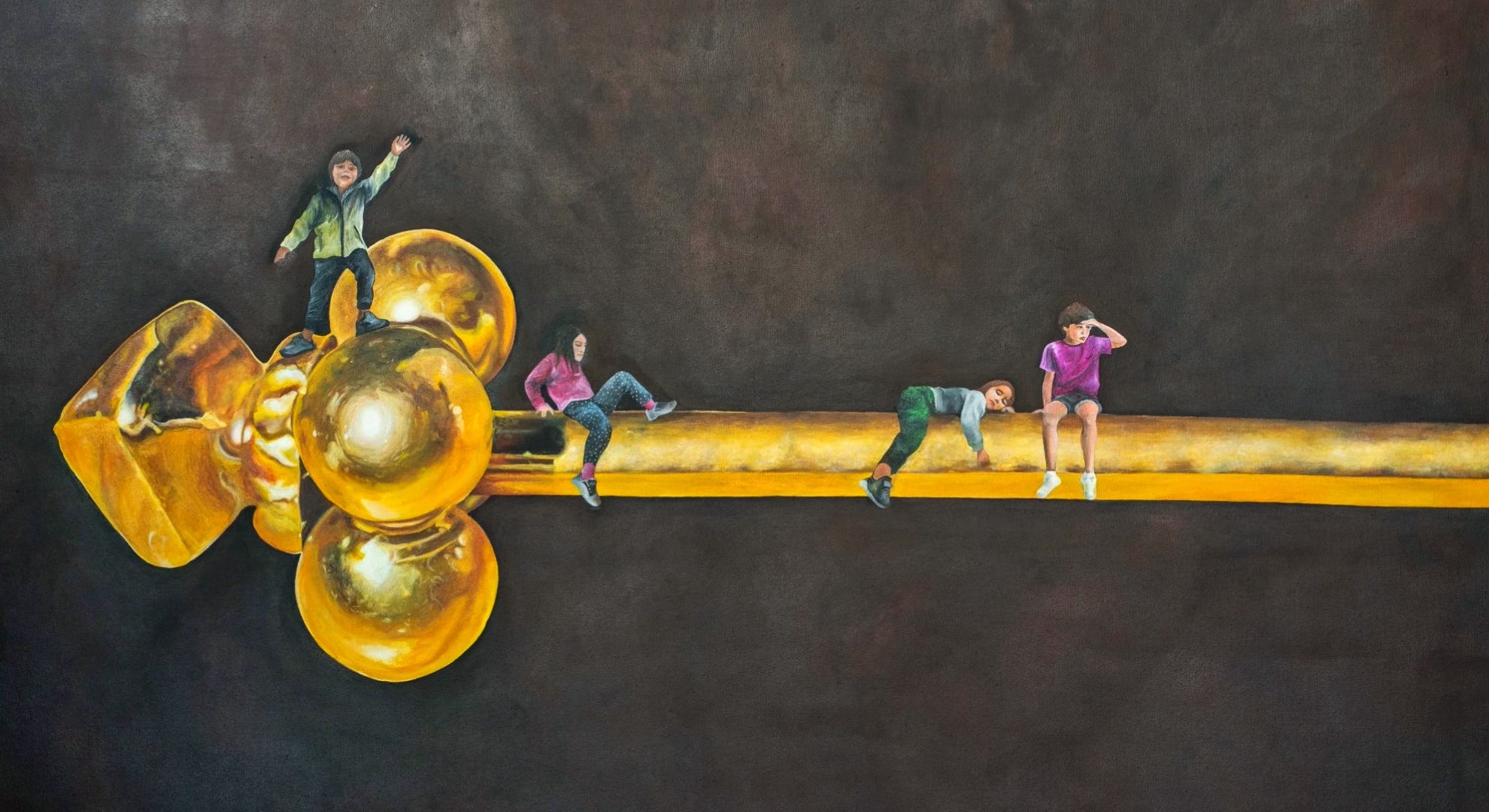
Raised across the Philippines, India, Indonesia, Australia, and the USA, Mrudhubhashini finds herself returning to the cultural references and mythologies of Tamil Nadu, which shape her work today. She often wields materials and colours historically associated with wealth and status, such as gold, bronze, and copper, to invoke and subvert their symbolic meanings through distortions in scale and context.
In ‘Thangam’, Mrudhubhashini transforms a familiar piece of jewellery from her childhood, the thandatti and koppu earrings, into monumental playground structures where children climb, swing, and play. The artist’s childhood fascination with these traditional earrings worn by the village women merges with the grown-up’s perspective: these adornments are, in fact, repositories of financial autonomy held by women. These assets that inspire childish awe also secure the future for generations to come.
We sat down with the artist to unpack her striking and thought-provoking series.
Thandatti carries symbolic meaning for gold ornaments from both a child’s and a woman’s perspective. What narrative are you building for these cultural icons to exist within?
Beyond my own childhood memory, these works attempt to revive a piece of jewellery - and its historical role - that has all but disappeared from collective memory. More importantly, they seek to draw a connection between the choices women of the past made, often with very limited agency, and the ways in which those decisions have shaped the lives of future generations.
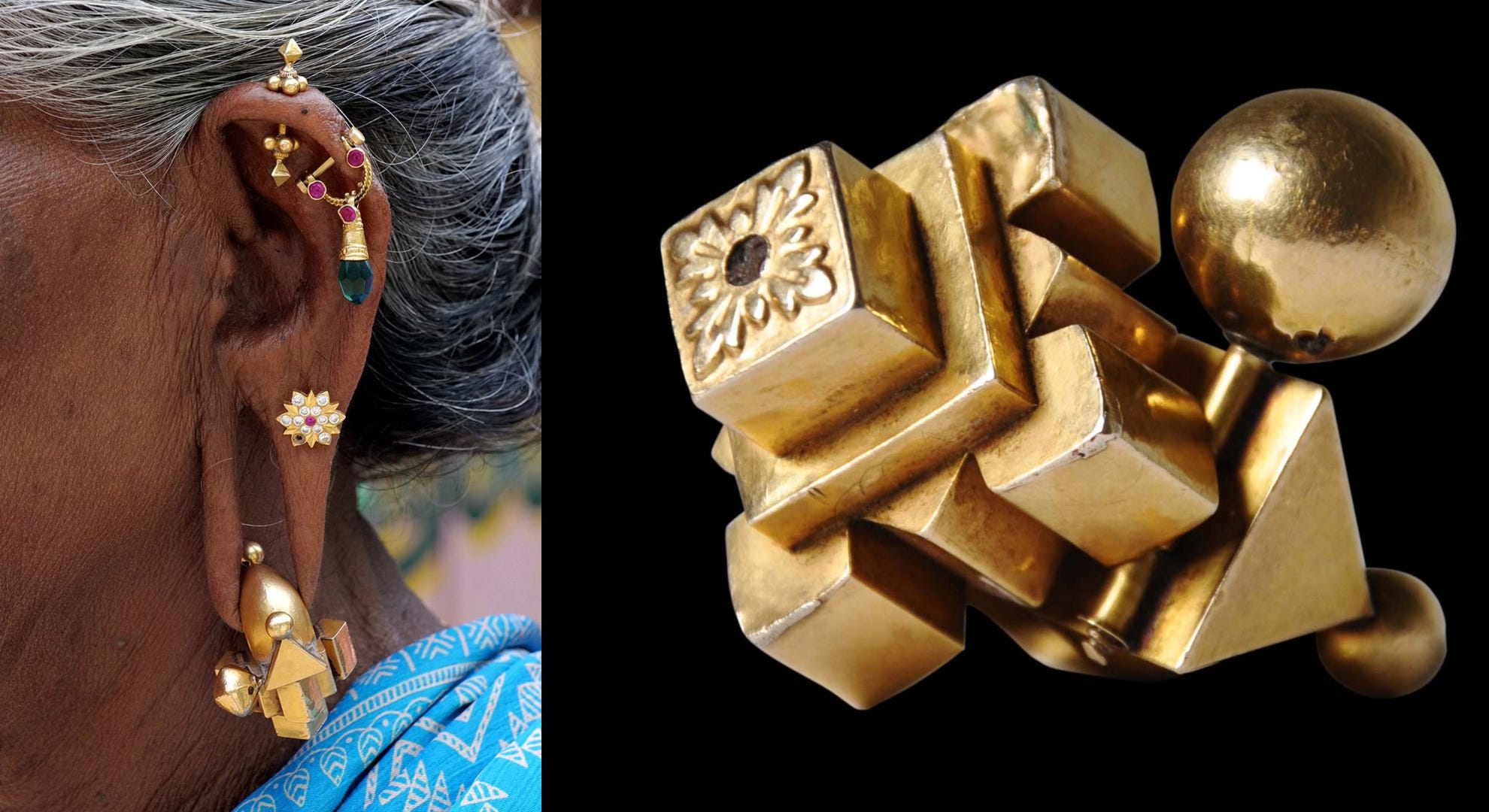
Image: (L) Indianearstories - Piercings from India. Pinterest.com
(R)Thandatti, Tamil Nadu, India,19th century. Michaelbackmanltd.com
What made you choose the traditional Thandatti earrings over any other piece of gold jewellery as a subject for this triptych?
The Thandatti was chosen as the subject of this triptych because of my early childhood fascination with it. As a child, when I saw women wearing Thandatti earrings, I imagined what it might be like to play with them - to roll them like a donut on a string through their elongated earlobes. I remember tracing the smooth, polished spheres, marked with signs of wear, and imagining what it would feel like to sit inside them. Their intricacy - the gaps, protrusions, and repeating patterns - captured my attention and sparked a sense of wonder.
As an adult, this fascination evolved beyond the childlike into a deeper engagement with the history, symbolism, and protective qualities associated with the Thandatti. Through researching this form, my understanding expanded to include a wider landscape of significant Dravidian jewellery traditions. What began as a single triptych has since grown into a broader series, exploring these ornaments and the enduring connections between the past and the future.
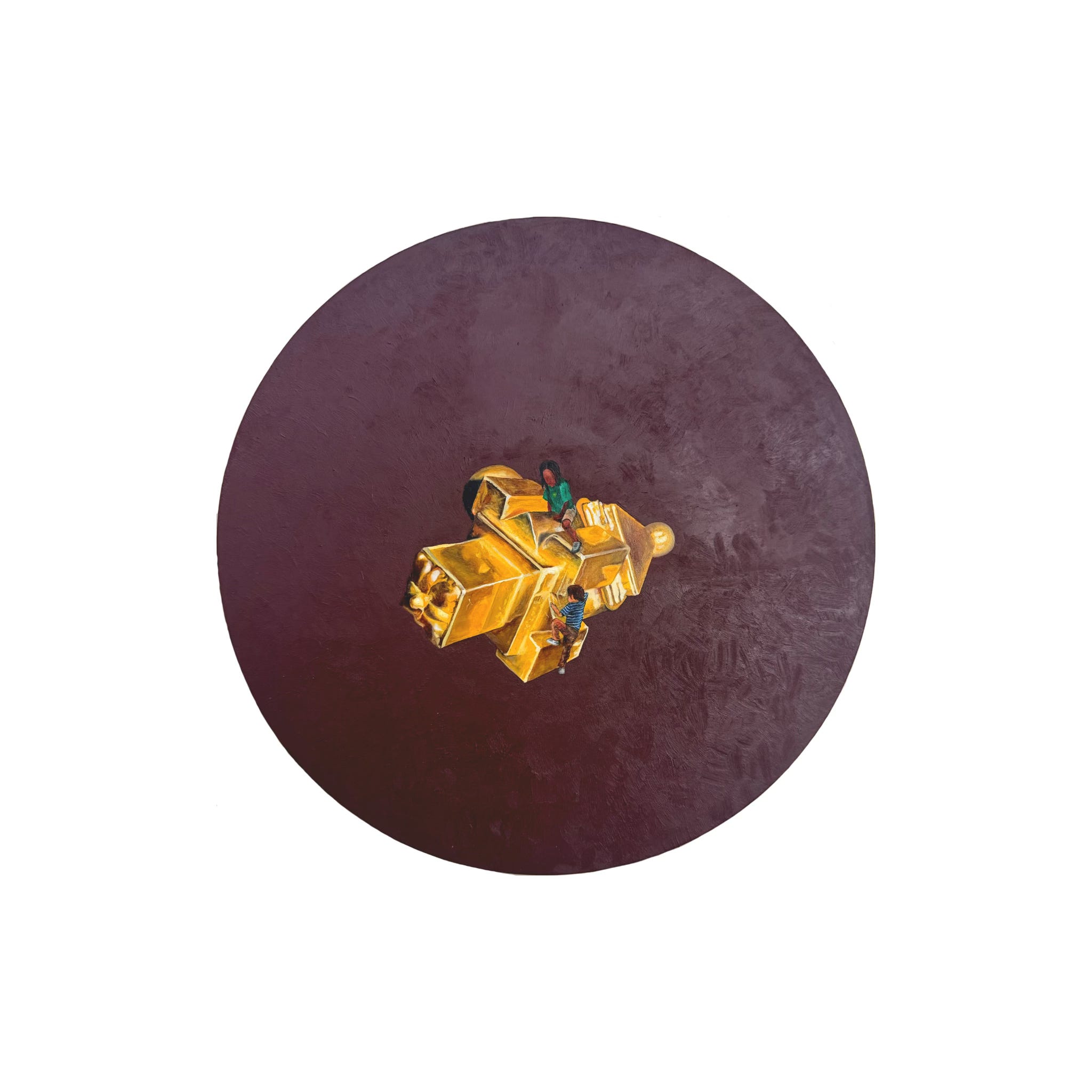
Image: Thandatti Triptych detail (1/3), 2025, Oil on Wood Panel. 12 x 12 in each
What kind of questions and artistic concerns fuel your creative process?
The impulses that fuel my creative process are often sudden and intuitive. They may emerge from a resurfacing childhood memory, a passing scene that leaves an impression, a film I have watched, or observations drawn from the everyday realities of being part of Indian society.
Emotions play a significant role in shaping the subjects I engage with - most notably frustration and anger, and more recently, joy. While the initial spark of inspiration is immediate, it is followed by a period of inquiry. I begin to ask why something struck me, what meaning it holds, how it continues to shape life today, and whether it warrants deeper exploration. I am particularly interested in questioning patterns of behaviour and the forces that sustain them. I view my creative process as fluid and continually evolving. Each work demands something different - some ideas take little effort to conceive, while others involve prolonged periods of uncertainty and emotional turmoil before they are fully realized.
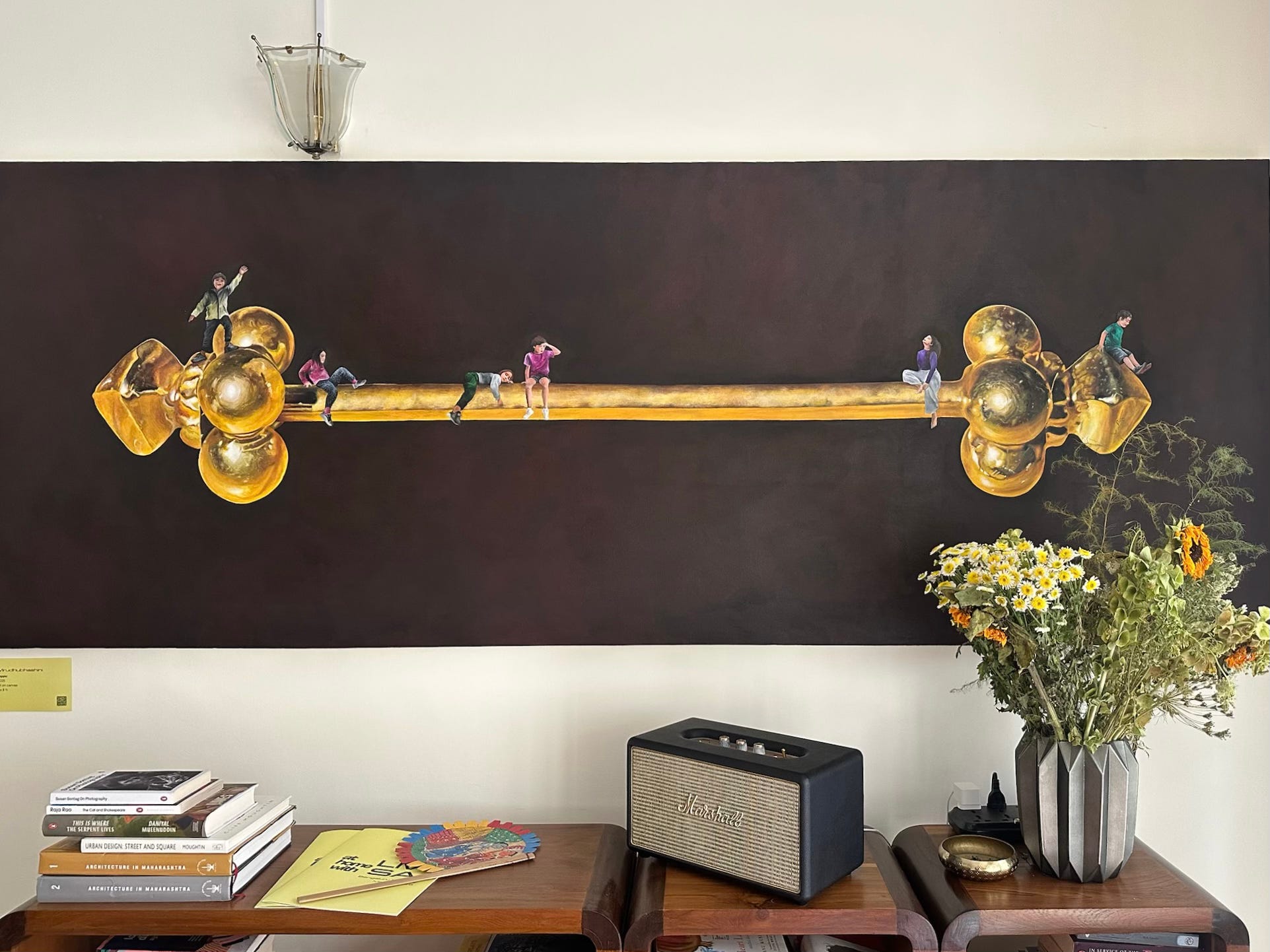
Image: Koppu, 2025, Oil on canvas. 3 x 8 ft
Beyond aesthetic beauty, what is the essential quality - be it a question, a feeling, or a new perspective - that you hope your art offers to its viewers and collectors?
Much of my work uses aesthetic beauty as a trap. I have long observed that our society tends to shy away from, or actively avoid, difficult subjects—from basic civic responsibility to the lack of autonomy often experienced by women. Beauty, however, is something we crave; we are drawn to it and compelled to linger near it.
As a creator, my aim is to lure viewers into this trap through surface-level beauty or striking visual qualities created by colour and composition. Once engaged, the layer of beauty begins to fall away, leaving behind questions, emotional responses, and discomfort. My hope is that the work compels viewers to confront these issues, to ask difficult questions, and to resist the urge to look away.
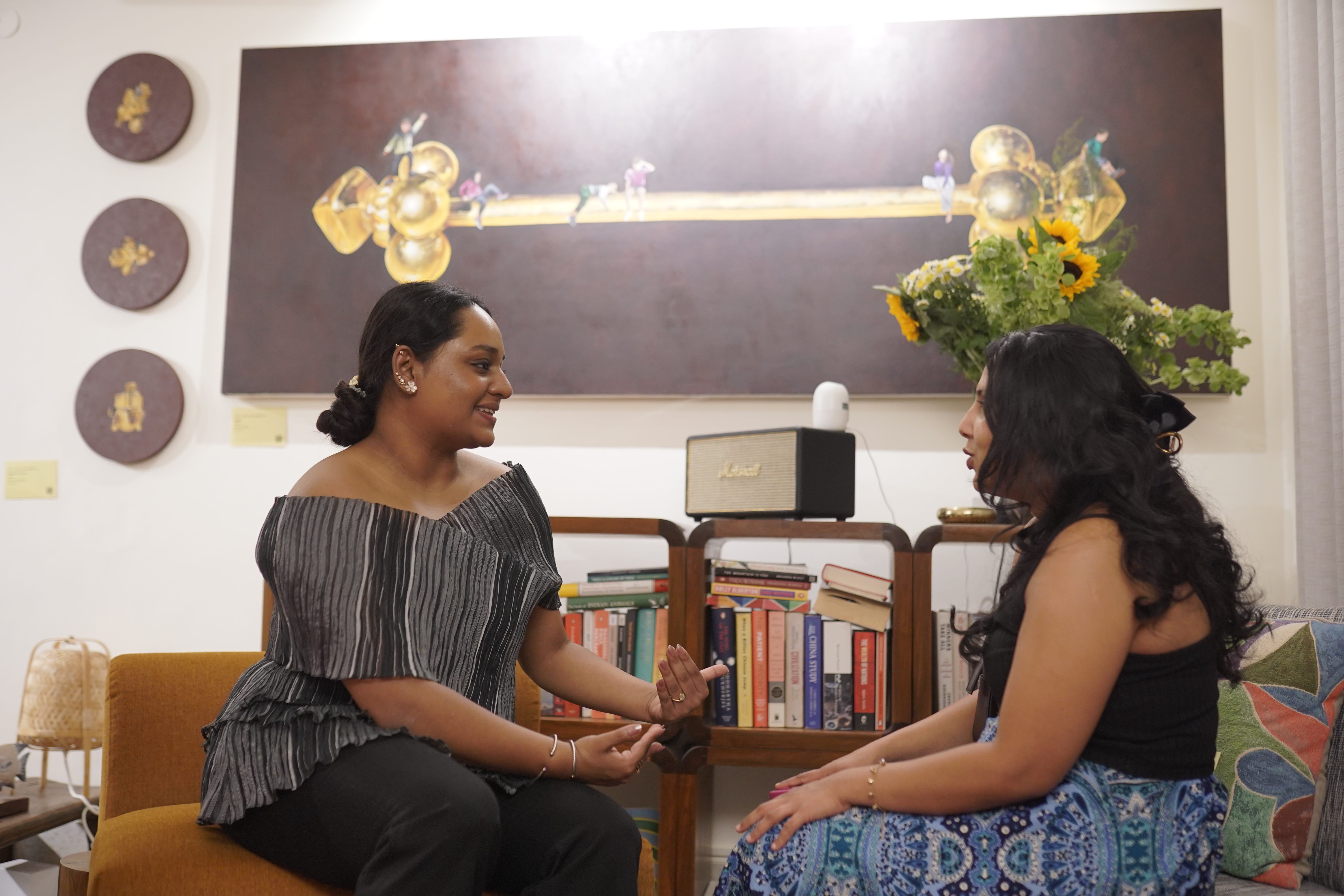
Image: Artist Mrudhubhashini (L), with works from ‘Thangam’ in the background, at the kickoff party for ‘At Home at LMSA’ in Bengaluru.
Now that this body of work is complete and being shared with the world, what has it left you with, personally?
This body of work, and the ongoing series it has grown into, is very special to me as it draws deeply from my own childhood memories and the fondness I feel for visiting and spending time in my grandparents’ village. For the first time in a long while, I have worked on a series that is filled with light, hope, and joy. Working in this space has taught me that meaningful thinking and exploration need not only emerge from difficulty or discomfort; they can also be provoked through joy, nostalgia, and fond memories. Engaging with these positive emotions has opened up new creative possibilities for me, allowing me to approach memory, culture, and personal history with a lighter yet still profound lens.
The LMSA Take
Mrudhubhashini’s interpretation of traditional gold jewellery injects a sheen that has less to do with the metal’s lustre and more to do with how kids view the world. Her expert use of space and scale arrests you, draws you in, and holds you in a daze. It is very easy to get lost in the photorealistic nooks and crevices of the gold’s carvings, the fuzzy textures of kids’ sweaters, and the deep umber brushstrokes that make these ornaments levitate like brutalist spaceships.
What’s most striking about Thangam is its refusal to settle into a single register. The paintings are visually joyful. Happy faces engrossed in play, structures that glow with warmth, yet the scenes carry the weight of generations. Mrudhubhashini doesn’t sentimentalize the gold or idolize it; she lets both possibilities coexist. The thandatti becomes a playground and a safety net. This balance is central to her broader practice. She uses glamour strategically, drawing viewers in with colour and craftsmanship before asking harder questions about what cultural symbols carry and conceal.
Explore this series on LMSA.art