Material Memory: The Hand Remembers
Working across clay, textiles, and photography, Nikitha Satish traces her impressions from a decade spent among artisans.

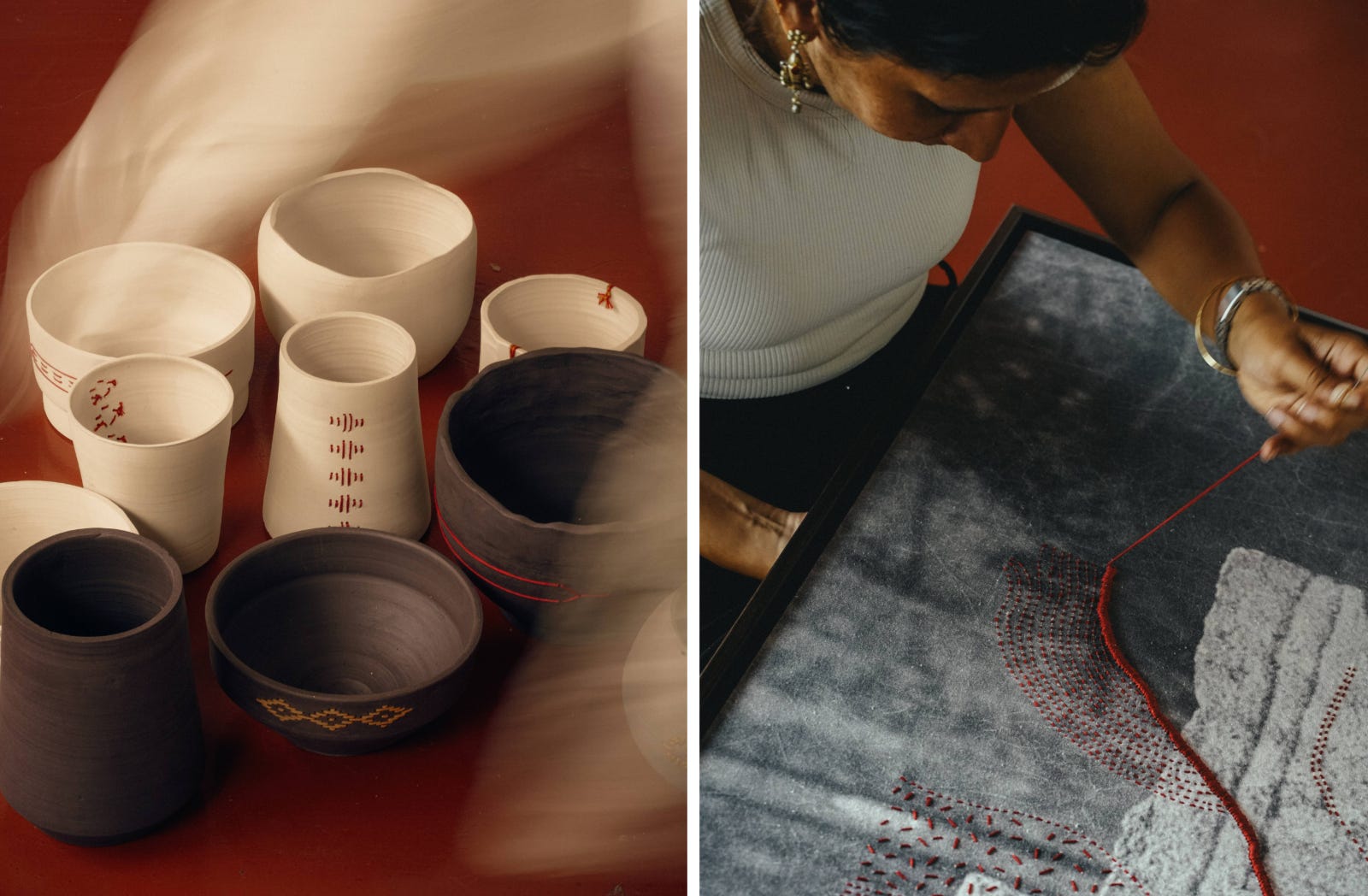
In Nikitha Satish’s Material Memory, a photograph is never just a photograph. Thread pulls through the surface, redrawing what the camera captured, until the image becomes something suspended between record and recollection. A ceramic vessel holds the pattern of Kasuti embroidery as if clay had learned to count like a loom. Across these works, memory is embedded in the uneven stitch, the impressed line, the slight irregularity that marks a hand’s presence.
Her practice has been shaped by nearly ten years of working alongside weaving communities in Bagalkot district, Karnataka. Material Memory emerges as a documentary, an archive of inner shifts, often seen when you stay long enough in one place to allow your craft to rewire your senses. Photography, embroidery, and ceramics become a single, migrating language, each medium translating the other. The result is a body of work that treats craft less as inheritance than as a way of seeing, remembering, and holding close.
We spoke with the artist about learning to listen to materials, the migration of a textile language across clay and paper, and the ethics of building an archive of relationships.
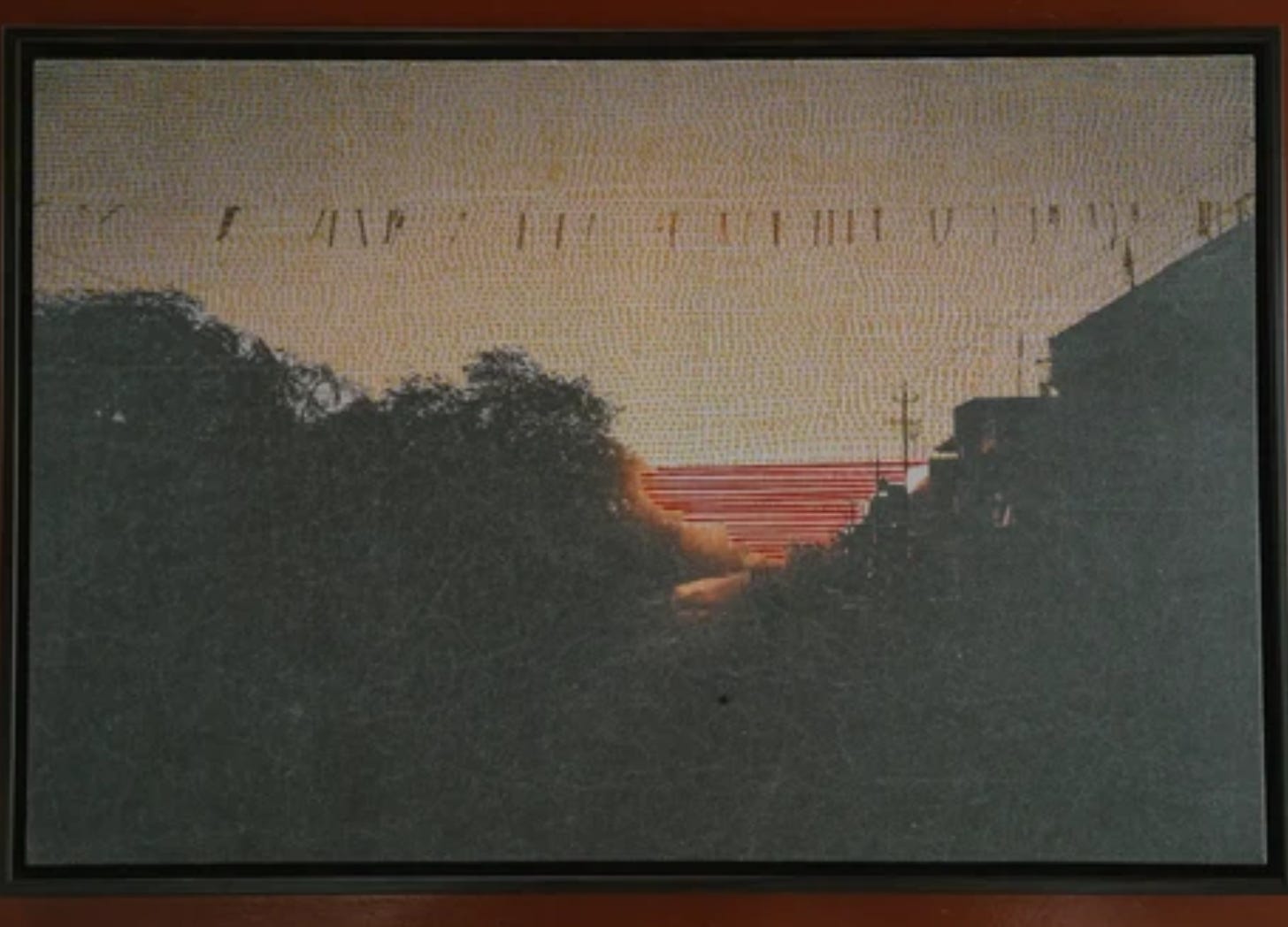
Image: Dawn (2026). Embroidery on Printed Fabric, 36 x 24 in.
Your practice stems from a decade of working alongside weaving communities in Ameengad. Can you take us back to the beginning? What first drew you there, and how did that initial encounter start to reshape your understanding of what making could be?
When I first started thinking about building something of my own, I knew I wanted it to have some meaning. I was interested in creating something that felt relevant to the present, something people would wear today but that was deeply connected to traditional craft.
As I was beginning that journey, it felt important to start with something that was personal to me. I was born in Dharwad, so I wanted to explore textiles that are native to North Karnataka—Ilkal and Kasuti embroidery. My initial thought was quite simple: I would begin with the crafts from my own roots and, over time, explore and work with other textile traditions across India.
But that plan changed the first time I visited the weaving communities.
Being there, understanding the complexity of the craft, spending time with the weavers, and getting to know the story, shifted my thought. It was also the first time I truly understood the realities of the handloom sector in India and the challenges weavers face every day.
More importantly, I felt like I had found a sense of purpose. I realized that if I wanted to make even the smallest difference it couldn’t be done through a few collections or a brief engagement. It required commitment, consistency, and time.
So instead of moving on to other crafts, I stayed. I continued working with the same weaving communities across a few villages in North Karnataka for the next ten years.
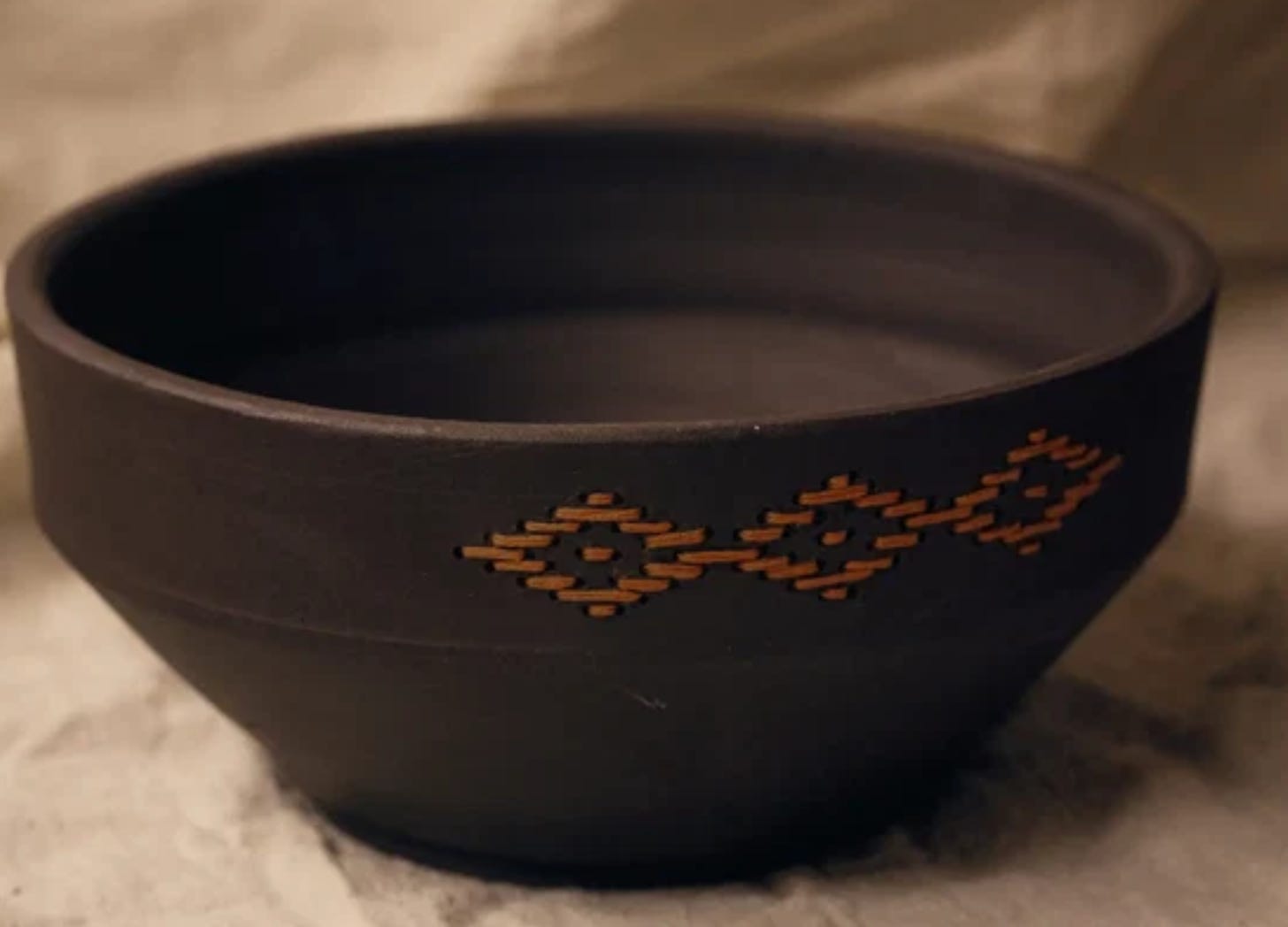
Image: Negi(2026). Stoneware Clay, Embroidery on Ceramic, Height- 3.5 in, Rim Width- 7.25 in
You approach craft- be it ceramic, photography, or textiles- as a living language, rather than tradition. Directionally, with this series, what were you evolving these practices towards?
For me, craft has never felt like something that should be preserved behind glass or just stay in the way it has been for hundreds of years. It’s a language—one that continues to evolve depending on who’s speaking through it.
For almost a decade, I approached Ilkal weaves and Kasuti embroidery as a designer. My focus was on creating products, working within the language of the craft while making it relevant for contemporary use. But this series marks a shift in that relationship.
Embroidery became a way of drawing. Photography became a surface for stitching into memory. Ceramics became another textile in a way—something that could carry rhythm, repetition, and marks much like cloth does.
So the work isn’t trying to modernize tradition for the sake of it. It’s about allowing these practices to move beyond function and become vessels for reflection, memory, and personal experience.
After spending so many years immersed in these crafts, I realized they had become part of how I think. The gestures, the patience, the repetition, the imperfections—they’ve shaped the way I make, regardless of the material I’m working with. Whether I’m using clay, thread, or photographs, I’m still speaking through the same language. It’s just finding different forms.
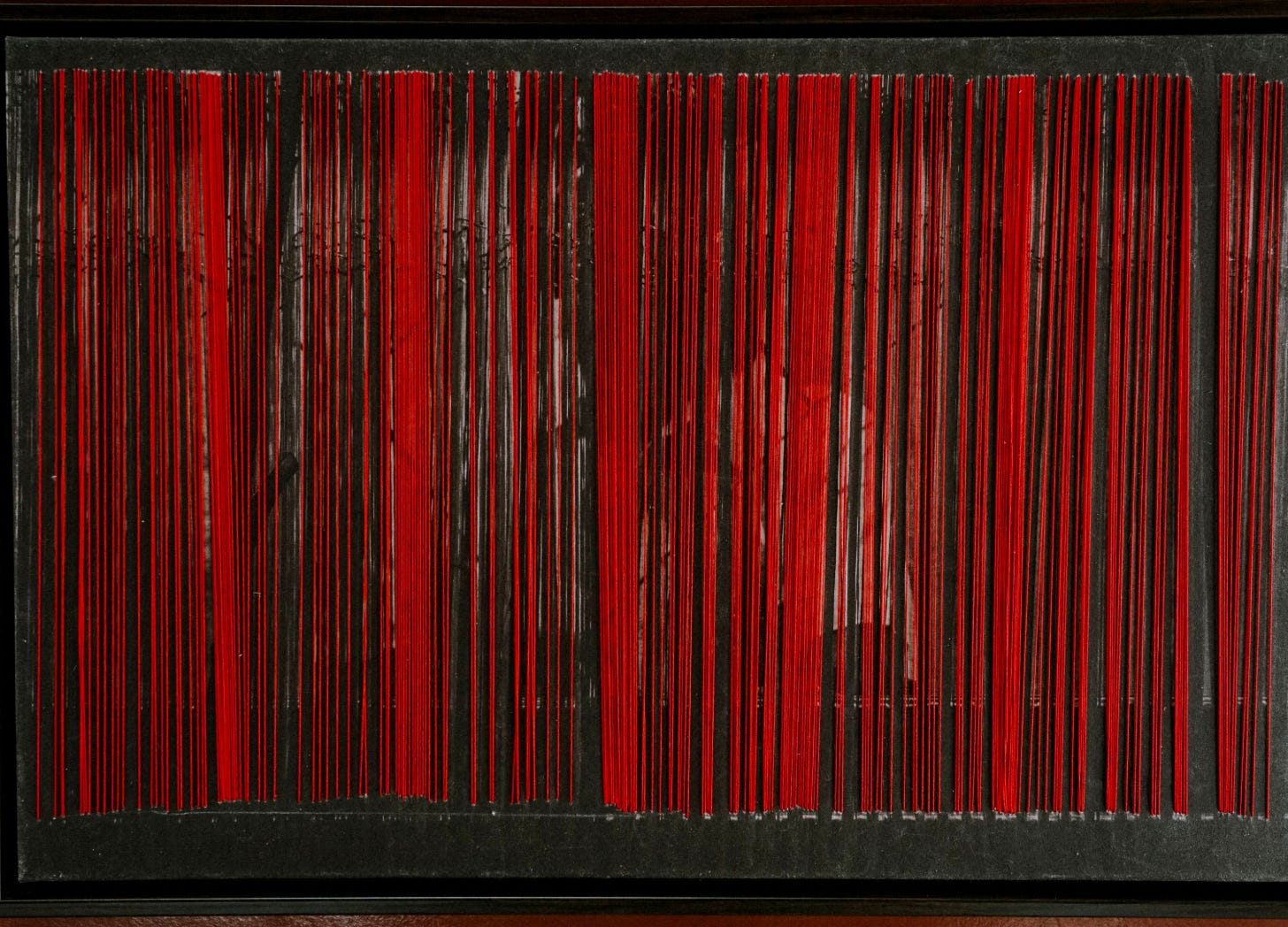
Image: Weave(r)(2026). Embroidery on Printed Fabric, 34 x 23 in
Do you feel a tension in working across fine art, craft, and documentary modes, or have you found a language that makes those boundaries irrelevant to you?
I don’t know if I experience it as tension, mainly because I don’t come from a fine art background. I’ve always come from a place of making.
Whether it was designing textiles, building products, working with clay, or now making these pieces, I’ve always been interested in the process of creating and understanding materials. That’s really where my practice begins.
So when I’m working, I’m not consciously thinking about the boundaries. I’m asking a much simpler question: What is the best way for me to express this idea or this memory? Sometimes that’s through a photograph, sometimes through embroidery, sometimes through clay, and often it’s a combination of all three.
In a way, not having a formal art background has been quite freeing. I don’t carry strong ideas about what each discipline is supposed to do, or where one ends and another begins. I think that allows me to move between them more intuitively.
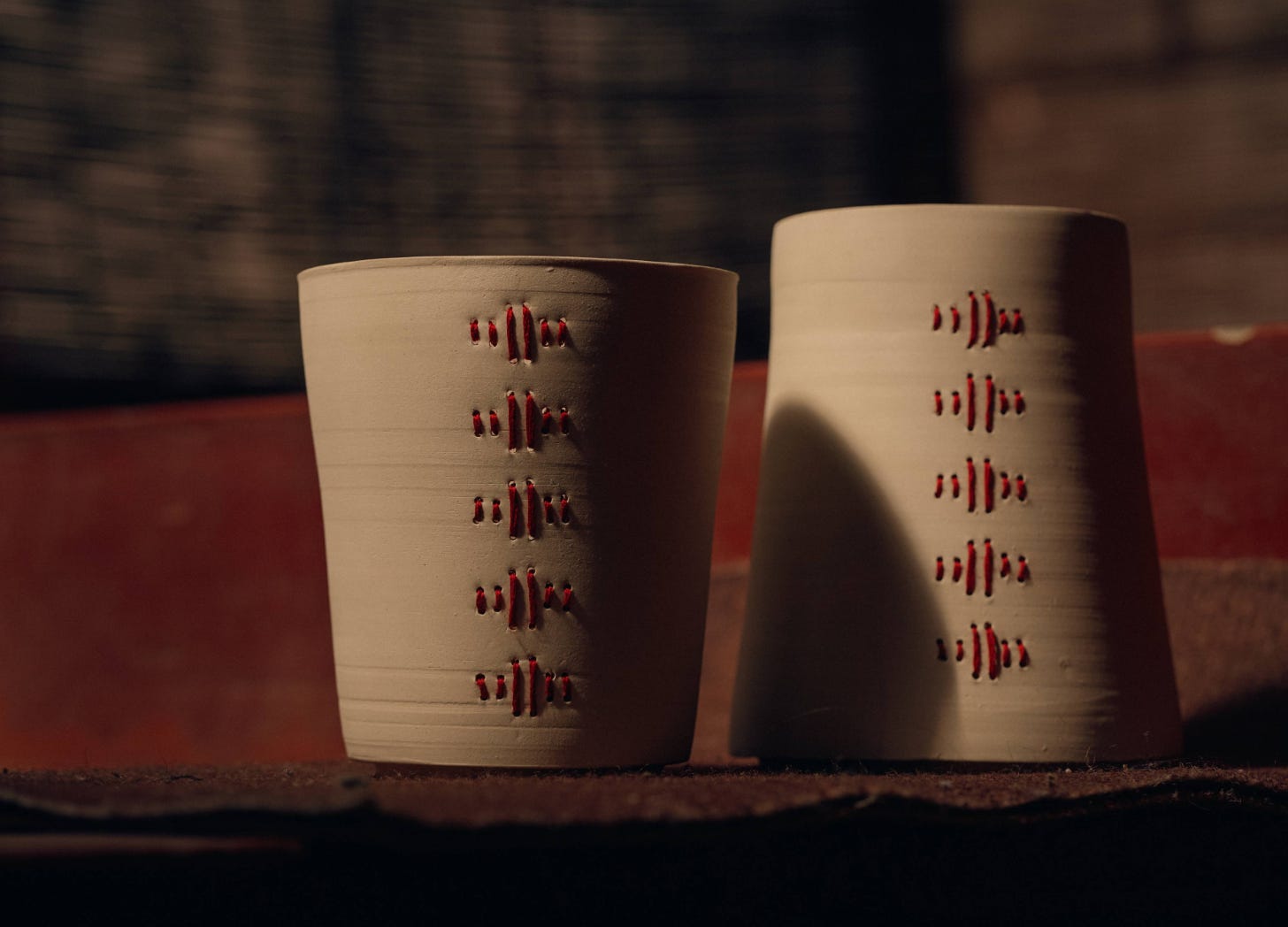
Image: Jodi (2026). Stoneware Clay, Embroidery on Ceramic
Vessel 1: Height- 6 Rim Width- 3.75, Vessel 2: Height- 5.25 Rim Width- 4.5
If you could guide someone through your work for the first time, what would ask them to spend time on? Do you hope they might unlearn something about art or craft in that encounter?
From a distance, the work can seem quite simple, it might look like a photograph, a piece of cloth, or a ceramic object. But as you move closer, you begin to notice the layers. You realize the photograph has been stitched into, the clay has been embroidered, and different materials and craft practices are quietly coming together in ways that aren’t immediately obvious.
I’d want people to spend time with those details. To notice a stitch that isn’t perfectly even, the texture of the thread against the clay, or the way the photograph changes once it’s interrupted by embroidery. Those small details matter because they’re evidence of the hand.
More than anything, I want people to be curious. I don’t want to tell them exactly what they’re supposed to feel or understand. My memories are the starting point, but once the work is out in the world, I think it belongs to the viewer as much as it does to me.
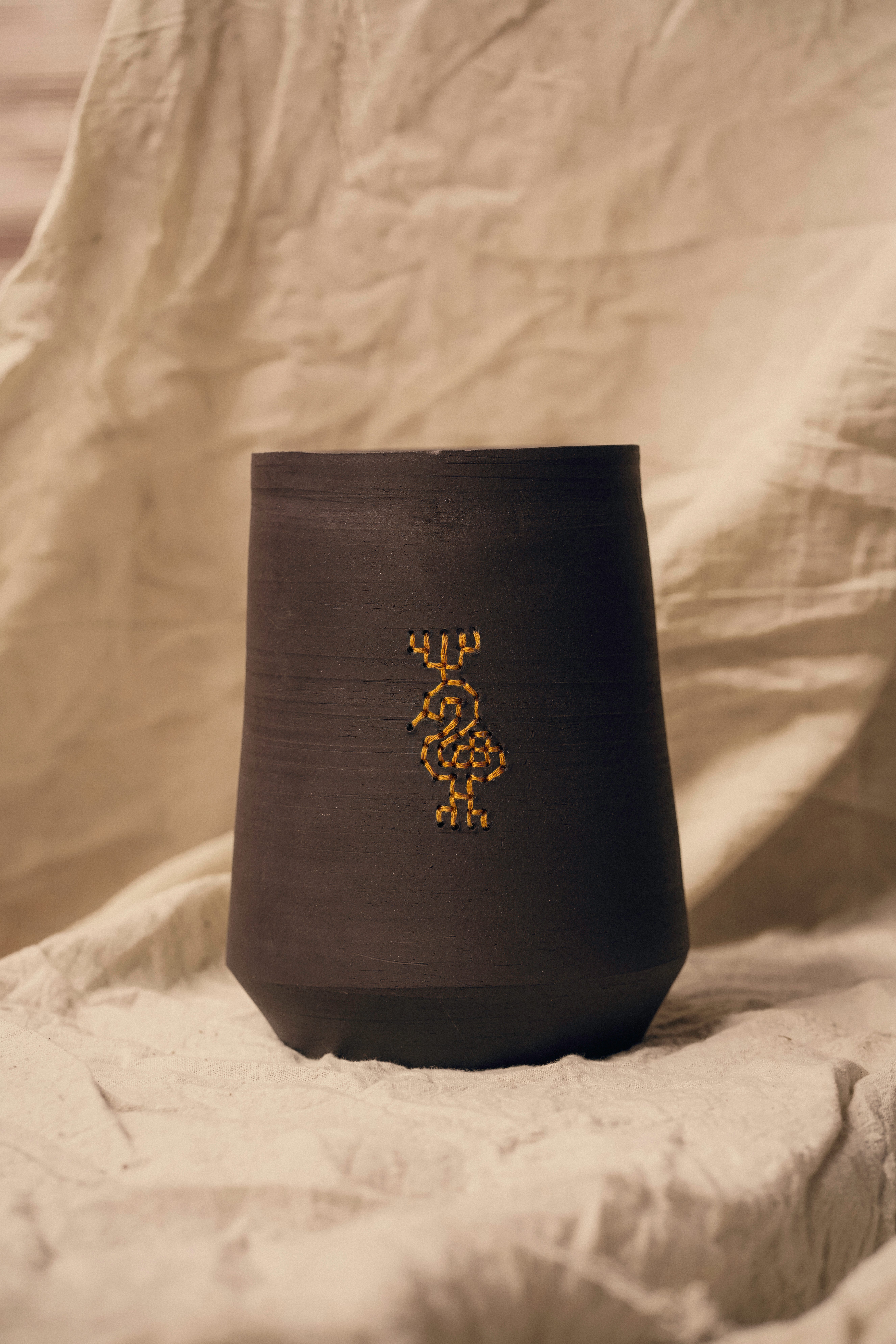
Image: Navilu (2026). Stoneware Clay, Embroidery on Ceramic, Height- 7 in, Rim Width- 4.25 in
Material Memory emerges from almost ten years of shared experience. How do you navigate the ethics of translating relationships and community knowledge into personal artistic work? What boundaries or responsibilities do you hold for yourself in that translation?
For me, this work isn’t an attempt to tell the weavers’ story on their behalf or to represent an entire community. It’s much more personal than that. It’s about documenting how those relationships have shaped me, how that place, those people, and the craft have influenced the way I think, work, and make.
I think honesty is the responsibility I keep coming back to. Being honest about where the work comes from, acknowledging the people and the craft that have shaped it, and making sure I don’t blur the line between their story and mine.
In many ways, Material Memory is an archive of a relationship. It’s not an archive of a community. That distinction is really important to me.
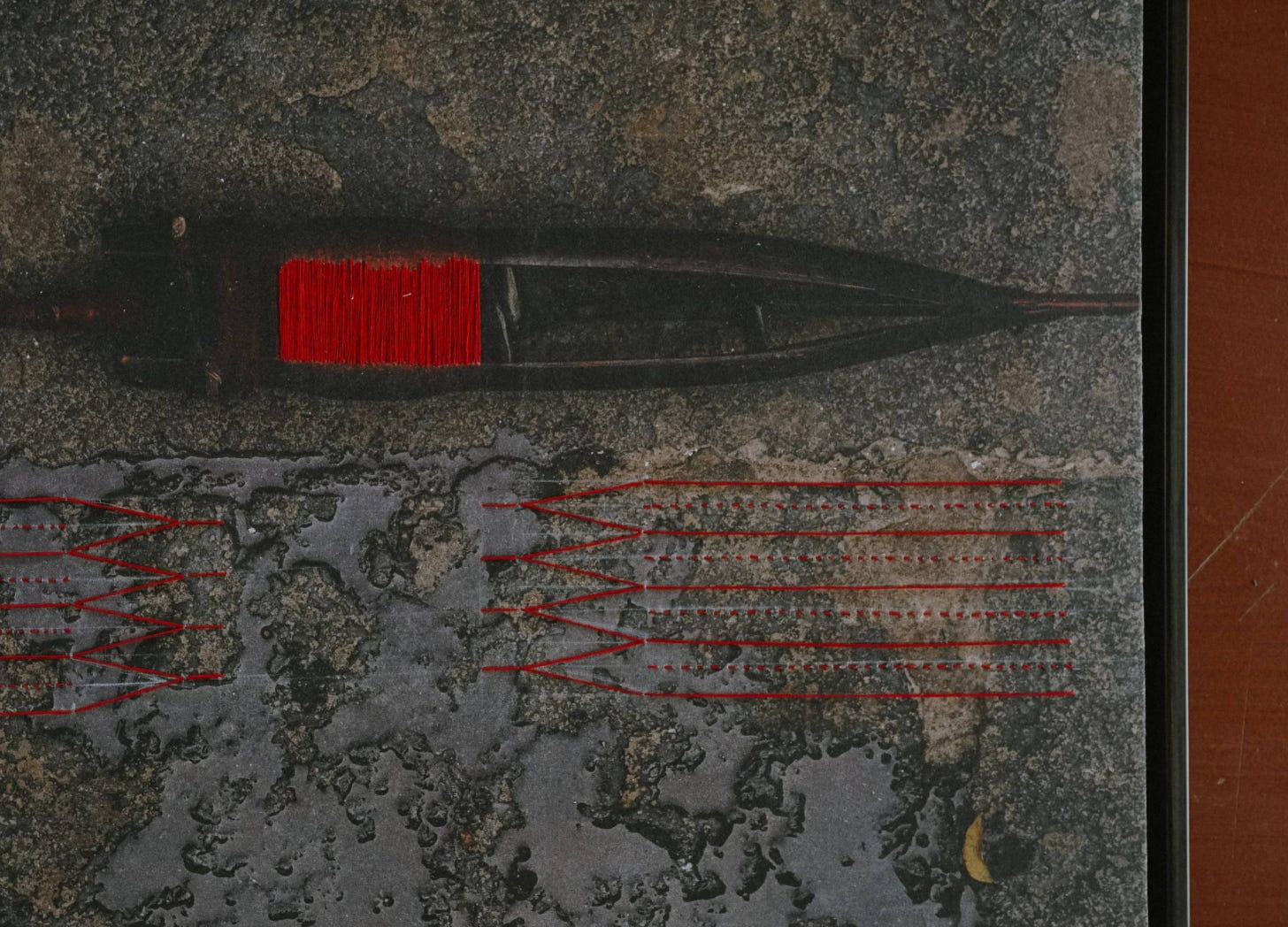
Image: The Shuttle(2026). Embroidery on Printed Fabric, 34 x 23 in
The LMSA Take
Nikitha works at the seam where disciplines rub against each other, and she lets them fray. That willingness to let one material trespass on another is what gives Material Memory its tensile strength. Photographs become scores for embroidery; clay vessels remember textile patterns; each piece seems to hold the residue of a conversation between the artist and the craft communities she has lived among for a decade. There is no attempt to freeze tradition, only to carry it forward in the body’s own memory. The result is deeply personal but never private, an invitation to slow down and notice how much of our inner lives are shaped by the gestures we inherit.
Explore the full series on LMSA.art