
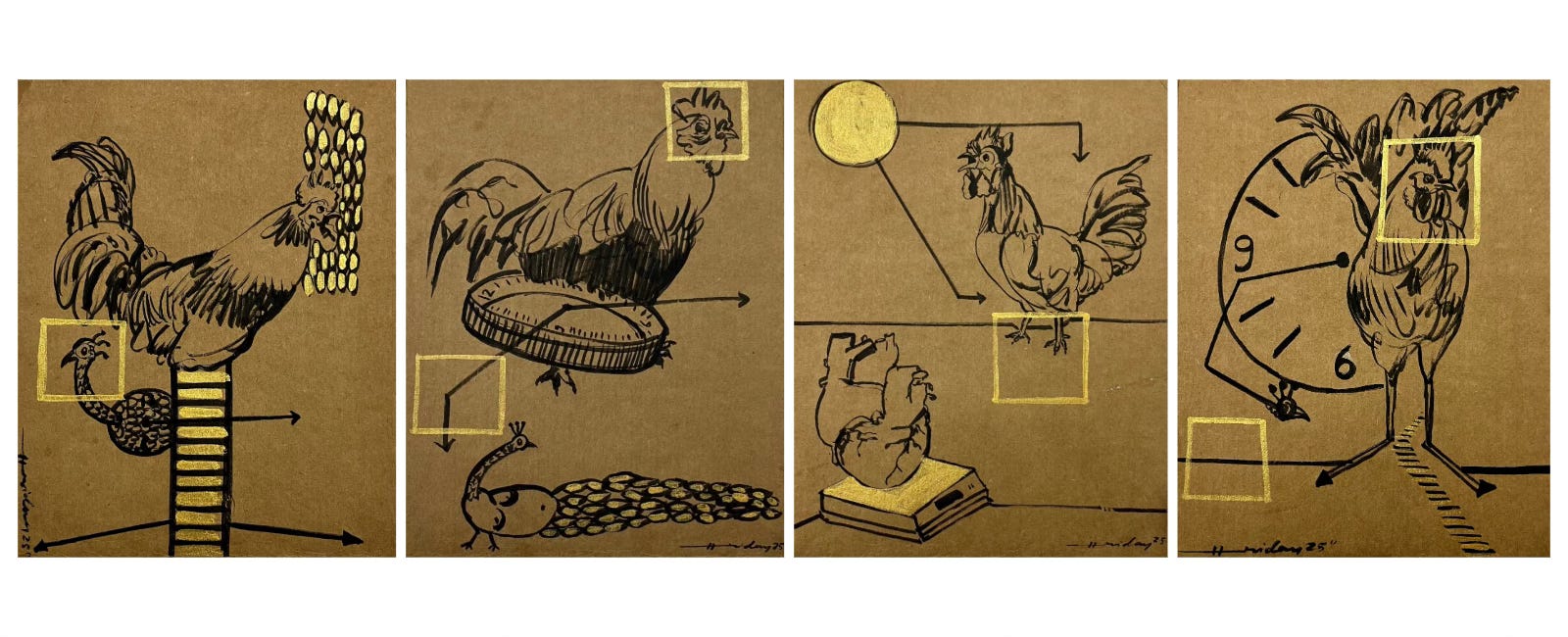
Image: Patience(2025), acrylic on paper. 11.5 × 9 in each.
In ‘Lost’, the Indore-based artist explores inner silence, confusion, absence, and the invisible moments he experienced going through life. He grew up around art (his father is an artist as well), and it is reflected in the experimental and slightly irreverent approach to subject and material exploration. This mixed-media series carries fragments of his life, his thoughts, and questions in pursuit of meaning and direction.
We sat down with the artist to unpack the rhymes and reasons that shaped this playful yet deeply serious body of work.
You mentioned that sometimes in your artistic process, “making comes before intention”. Where do you start when you don’t know what you’re making?
When I don’t know what I’m making, I start with the act of painting itself. For me, painting doesn’t always begin with a fixed idea or concept. It often begins with instinct—putting colour on the canvas, making marks, and allowing the process to unfold naturally.
Sometimes, the visual comes first. Shapes, textures, or colours start interacting, and gradually something begins to emerge. Only after this stage does the concept reveal itself. In that sense, making comes before intention.
As an artist, I don’t feel the need to always begin with a clear concept. The only intention at the start is to paint, to engage with the material and see what happens. The meaning develops along the way, through the process itself.
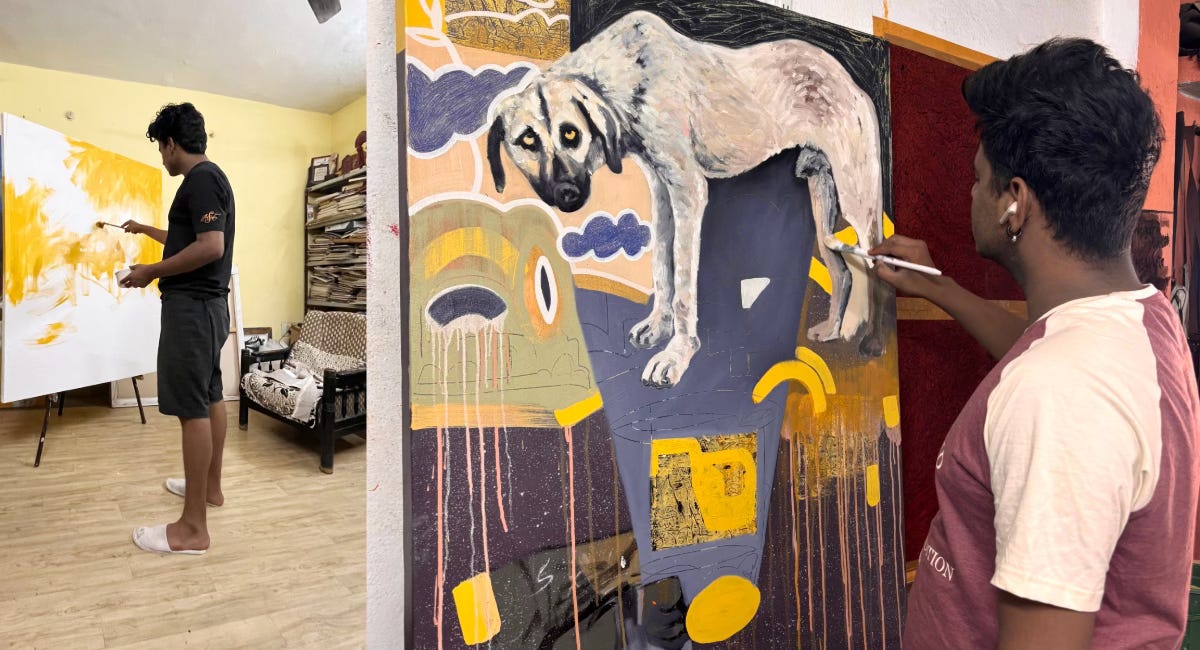
Hriday at work in his studio.
Tell us more about the characters in your ‘Lost’ series: the rooster, the horse (or donkey?), the peacock. Where does that visual vocabulary come from?
The visual language for ‘Lost’ comes from my early practice, where I began using animals as a way to express thoughts and emotions that are difficult to explain directly. Over time, these animals became recurring characters—almost like symbols of different states of being.
This series is deeply connected to my own life and a sense of inner chaos. Each animal carries a specific psychological or emotional meaning. The horse represents the fast pace of life: constant movement, urgency, and the feeling of being carried forward without pause. The rooster suggests sacrifice, a kind of repetitive cycle where something is constantly being given up. The donkey reflects a state of confusion, doing things without fully understanding why, yet continuing anyway. And the peacock introduces a contrast, symbolizing moments of calmness and normalcy within the chaos.
These characters are not fixed symbols, but evolving ones. They shift depending on the context of the painting, much like emotions shift in real life. Together, they create a visual vocabulary through which I explore my experiences of being ‘lost.’
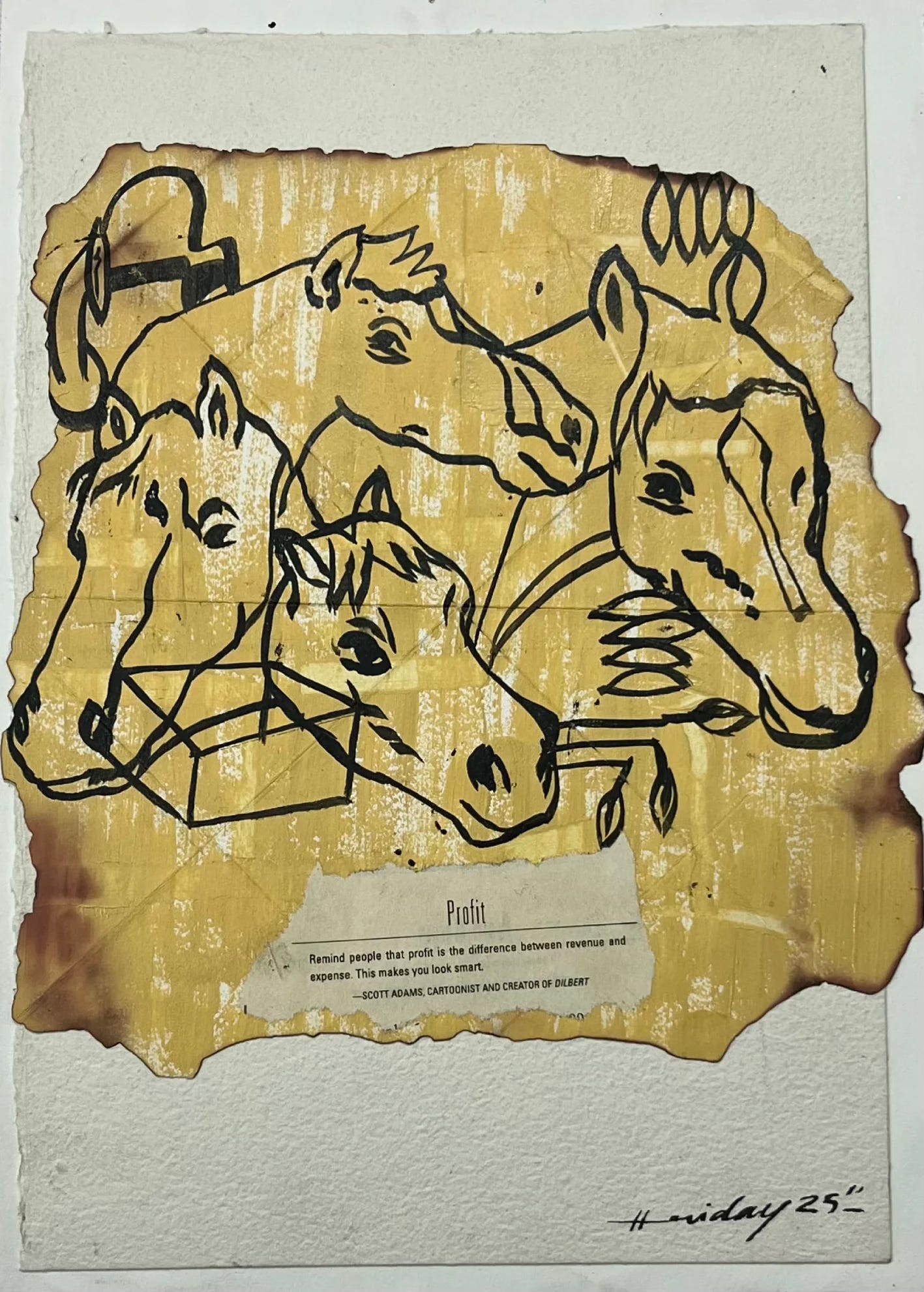
Image: Untitled (1/3), 2025, mixed media on paper. 11.69 × 8.27 in each.
You’ve kept the colours and materials in this series quite self-contained: ripped and burnt pages from old business textbooks and origami, offset by bright tones and gold. What were you hoping those choices would communicate?
I don’t fully fix what these materials should communicate. Like my paintings, their meaning develops in the process. But my choices come from certain clear associations.
Origami represents the folds of life in ways experiences shape us, how something simple can transform into a form through pressure and movement. Burnt paper brings a sense of damage and intensity; it creates raw marks that feel like traces of experience or memory. The old business textbooks introduce ideas of profit and loss, which I see as a metaphor for life itself: the constant calculation, gain, and sacrifice it demands.
The bright colours and gold work as a contrast to all this. They bring attention, value, and sometimes even irony. Together, these materials build a layered surface where personal experience, structure, and chaos exist at the same time.
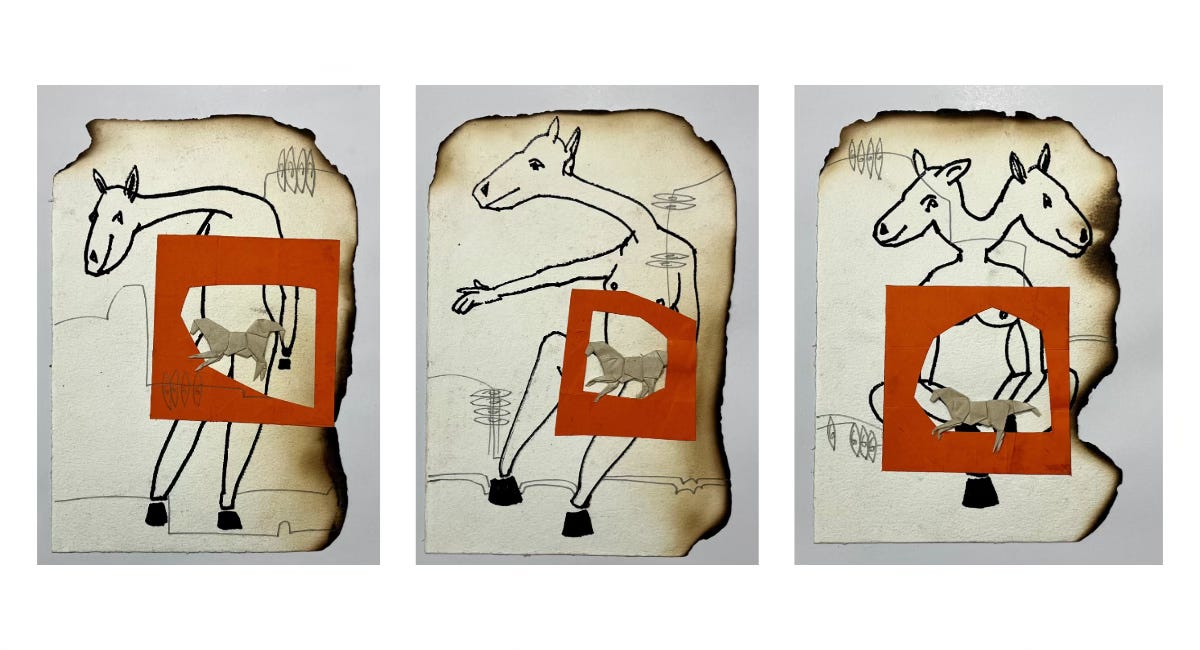
Image: Be There (Triptych), 2025, mixed media on paper. 11.69 × 8.27 in each.
If you could go back to the beginning of creating this series, what would you tell the artist you were then, knowing the journey these works would take you on?
I would tell myself to just keep going. In art, the most important thing is to keep painting.
You paint, then you begin to see. You see, then you start to understand. And once you understand, you know what to do next.
What is the reaction or takeaway you hope to inspire in viewers and patrons of your art?
My work is about movement, both in form and in thought. It comes through experimentation, trying things without always knowing the outcome.
Through my art, I want viewers to feel that sense of constant change and uncertainty. Life is always full of chaos, but we learn to move through it.
I don’t try to give a fixed message. I just want people to recognize that chaos exists, and that we can still move forward beyond it.
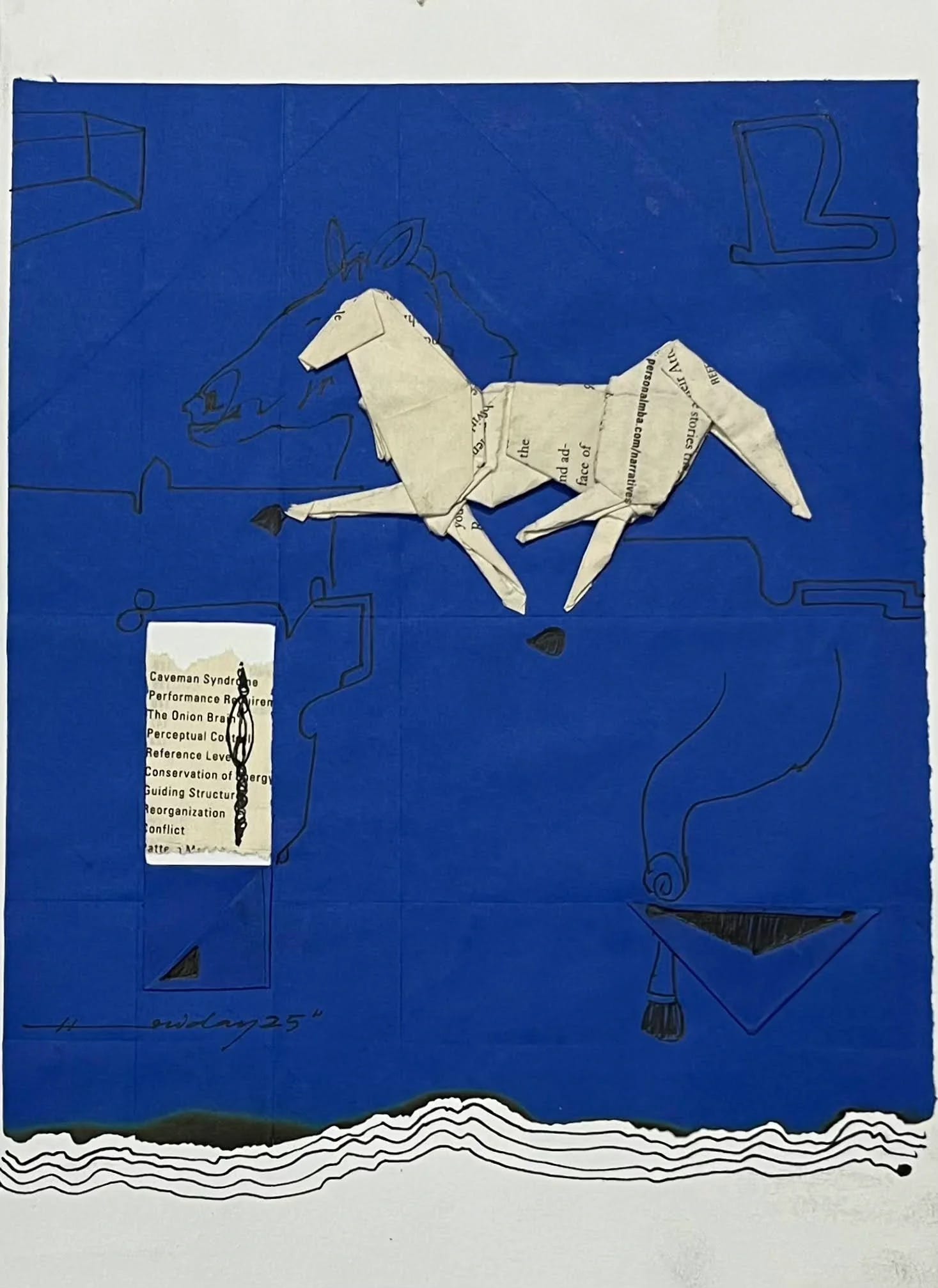
Image: Run(1/4), 2025, mixed media on paper. 11.69 × 8.27 in each.
The LMSA Take
Perhaps the most discerning quality in Hriday’s practice is this relatable, self-deprecatory humour that often comes from personal vulnerabilities laid bare on canvas. His tonalist polyptychs are much like storyboards, capturing specific moods and moments from his personal journey. Yet, these could be stories taken from anyone’s youth, and it is this universality that makes his art relatable and widely appealing.
He expertly weaves themes of urbanism, hustle-culture, and soul-searching through wiry, gestural animals set against gold tones on pages from old business textbooks. The rare glimpse of colour arrives boldly- Klein blue and cardstock red- providing his cartoon-strip sketches a sophisticated relief. Origami animals are superimposed on wiry doodle creatures, as if the artist is trying to fill the aspirational gaps in his life with the fragile, folded proxies of his ideal self. Hriday’s art poses urgent questions about purpose and capitalism, and all those formative elements that come with adulthood. His series is for the collector who enjoys taking life with a pinch of existential humour.
Explore all of Hriday Arya’s work from ‘Lost’ on lmsa.art